Creating a dedicated spiritual space, or mandir, has become a design challenge and a personal concern for many in today’s urban environment, where apartments and flats predominate the residential landscape. Having a mandir at home promotes a profound sense of serenity, tradition, and spiritual grounding despite space limitations.
In order to create a mandir in an apartment that both represents your dedication and blends well with the contemporary architecture of small residences, this article explores practical, artistic, and spiritual options.
1. The Value of a Domestic Mandir
A mandir serves as a haven for the soul and is more than just a building. It represents discipline, faith, positivism, and the continuation of tradition for many Indian households. A mandir offers a specific space for introspection, prayer, and private times of calm, even in the smallest of households.
2. Placing a Mandir in an Apartment: Vastu and Usefulness
Vastu Suggestions:
In line with Vastu Shastra:
A mandir should be placed at the north-east (Ishaan) corner.
To align with fortunate forces, facing either the east or the north when you pray.
If at all possible, keep the mandir out of the bedroom, away from restrooms, and beneath stairways.
Practical Aspects: Make sure the area is clutter-free and peaceful.
Natural light and enough ventilation contribute to the preservation of atmosphere and purity.
Cleaning and maintenance must be easily accessible.
3. Mandir Design Types Fit for Apartments
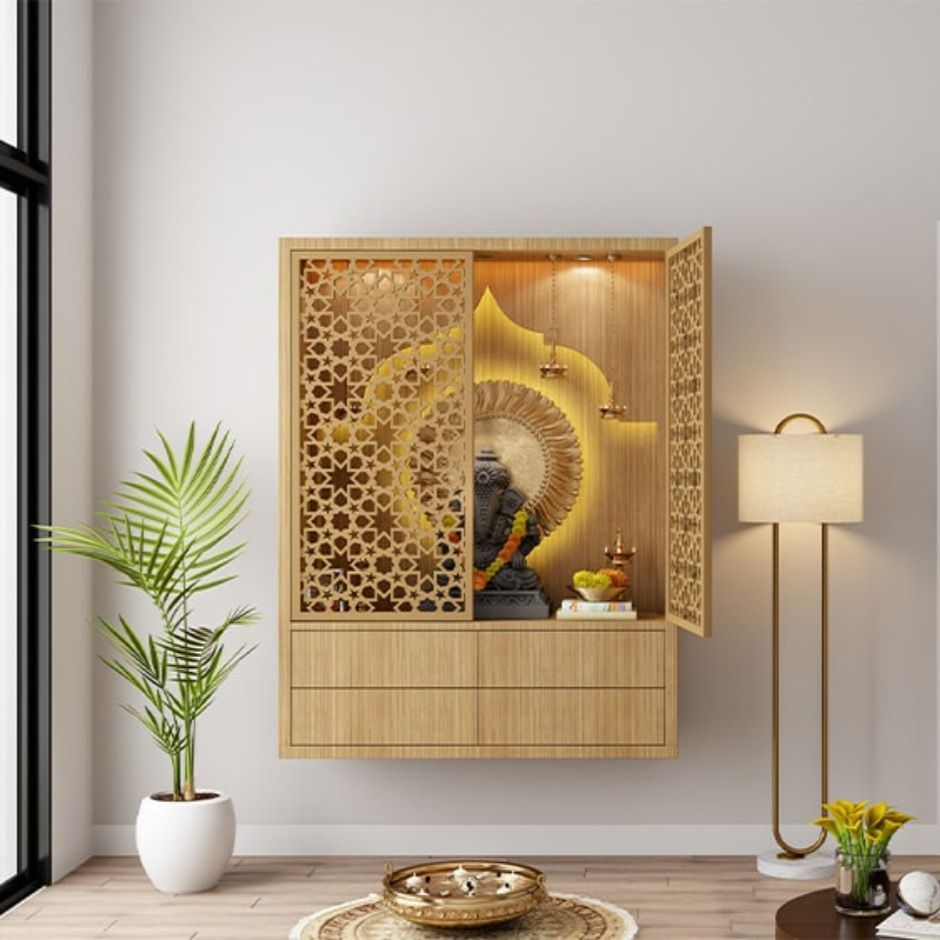
a. Mandirs mounted on walls
These utilise vertical space and are perfect for compact apartments. Dining rooms, corridors, and even living rooms might have them installed.
Small but stylish
Installing and maintaining it is simple.
Small shelves for keeping puja supplies can be included.
b. Mandirs on Corners
It is possible to turn unused room corners into places of spiritual retreat.
Made to order to fit into confined spaces
may consist of platforms or tiers of shelves.
complements ornamental lighting and accessories beautifully.
c. Cupboard Mandirs or Cabinets
For incorporating the mandir into furniture design, these are ideal. They provide sanctity and secrecy when closed, just like ordinary cabinets.
can be constructed from engineered materials or wood.
Provide a secret place to keep puja supplies.
Practical for houses with little floor area
c. Transportable Mandirs
For people who move around a lot or rent, these portable, usually folding mandirs are ideal.
Simple to put together and take apart
obtainable in MDF, fibre, or wood
Frequently utilised in tiny patios or bedrooms
f. Recessed wall mandirs or niches
These mandirs have a smooth, clean appearance since they are built right into the wall.
Early planning is necessary for construction or renovation projects.
Provide an upscale, integrated look.
can be embellished with carvings, tiles, or backlights.
4. Material Selection for Building a Mandir
Your choice of material should complement your preferred maintenance style, spiritual sensitivity, and design motif.
Common Resources:
Wood: Classic, cosy, and timeless. Popular woods include mango, teak, and sheesham.
Marble: Stylish and unadulterated. White marble is frequently utilised to create a calm atmosphere.
Metal: Copper or brass components might be utilised for idols or embellishments.
MDF/Engineered Wood: Cost-effective and adaptable for designs that are modular or rental-friendly.
5. Design Ideas for Contemporary Minimalist Mandirs
Neutral colours and crisp lines
Compact units or shelves installed on the wall
A few idols and dim illumination
Decorative wooden carvings in a traditional temple
Diya stands, torans, and bell hangings
Rich hues such as saffron, gold, and deep red
Modern Mandir
Backlit panels and floating shelves
Combining glass and metal with subtly mystical themes
Perfect for interiors with an industrial or modern aesthetic
Mandir in the South Indian Style
Wooden frame with domes and pillars resembling temples
Tulsi maadam, brass lamps, and elaborate sculptures
Frequently utilised in larger living spaces
6. Mandir Lighting
In order to create a wonderful mood, lighting is crucial. The mandir ought to be inviting, bright, and cosy.
Ideas for Lighting:
Backlighting: A halo effect is produced by LED strip lights behind the background.
Overhead Lighting: The idols and frame might be emphasised with spotlights.
Lamps and Diyas: Authenticity and charm are provided by brass or silver lamps.
Fairy lights or candles can subtly add a festive feel.
For a calming spiritual atmosphere, use yellow-toned lighting rather than glaring blue or white lights.
7. Adorning Your Temple
Your sacred area gains cultural and personal accents through decoration.
Crucial Components of the Decor:
Murti or idols: Make your choice based on your level of devotion. Make sure they match the size of the mandir.
Images of Deities: They might be positioned next to or behind idols.
Flowers: The visual and spiritual atmosphere is enhanced by fresh marigolds or roses.
Holders for incense and camphor: For scent and purification.
Bell: Completes the ceremony and adds sound.
During pooja, Chowki (Low Seat) is used for sitting or making offerings.
8. Mandir Storage Options
To keep puja supplies neat and easily available, even little mandirs require well-organized storage.
Clever Storage Ideas: Oil, matchsticks, diya, and incense pull-out drawers
Cabinets overhead for holiday décor
Secret spaces for holy texts and sacrifices
Malas or bell wall hooks
9. Personalising Mandirs in Each Room
Depending on how your apartment is laid out, mandirs can be moved to different areas:
Corner or wall-mounted units in the living room
Respectful but visible, merging in with the décor
A small shelf or nook mandir in the kitchen
Traditionally, Indian houses view it as auspicious.
Enclosed, weatherproof cabinet mandir on the balcony
Perfect for people who pray in a semi-outdoor setting.
Within the Bedroom
Choose mandirs that are smaller and have doors that can be closed when not in use.
Never place idols at foot level; instead, keep them high up.
10. Preserving the Energy and Cleanliness of the Mandir
For aesthetic and spiritual reasons, a clean mandir is essential.
Maintenance Advice: Clean surfaces every day.
Regularly swap out the offerings and flowers.
Don’t preserve torn scriptures or broken idols.
Keep oil spills and incense ashes cleaned up right away.
To maintain the sacredness, keep the area clear of clutter, distractions, and unnecessary objects.
11. Safety Advice for Mandirs
When using oil lamps, incense, and candles, safety is particularly crucial.
Before leaving a room, always put out any open fires.
Keep puja objects away from paper or drapes.
Make use of sturdy holders for lamps and diyas.
Make sure you have the right insulation and wiring if you utilise electric lights.
12. Customising Your Temple
Your travels, beliefs, and aesthetic should all be reflected in this hallowed area.
Name plates including religious symbols and family names are examples of personal touches.
Rangolis, mandalas, or handcrafted artwork
A little verse or inspirational saying on the wall
stones or artefacts gathered during pilgrimages
In conclusion, creating a sacred corner in contemporary life
Building a mandir is an act of commitment and mindfulness in the hectic setting of an urban apartment. Despite the size constraints, your mandir can become the most serene and potent area in your house with careful planning, spiritual purpose, and aesthetic harmony.
Whether you like minimalist design or traditional construction, having a mandir in your apartment helps you stay connected to your inner serenity, roots, and values. It serves as a reminder that the spirit can nonetheless find a hallowed home amidst glass and concrete.