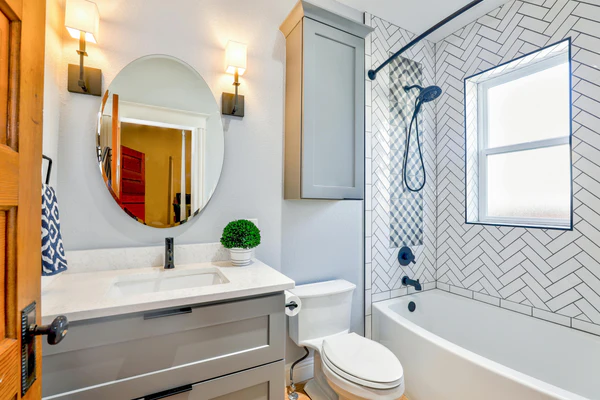

Regardless of its size, a bathroom is one of the most crucial rooms in a house. You start and finish your day there. However, small bathrooms might be a challenge when it comes to home remodelling. A careful balance between functionality and aesthetics is frequently required due to storage limitations, odd layouts, and limited space. However, with the correct strategy, a small bathroom renovation may turn a little, antiquated space into a beautiful and functional haven.
Everything you need to know about remodelling a small bathroom is covered in this article, including design and planning concepts, fixture selection, space optimisation, and material selection. This thorough guide will assist you with every step of the procedure, whether you’re renovating an outdated powder room, turning a half-bath into a full one, or just trying to update the look.
Why Make a Small Bathroom Remodel?
Making the most of what you have is more important than aesthetics when remodelling a small bathroom. Here are some strong arguments:
Better functionality: Outdated plumbing, inadequate layouts, and a lack of storage can all be fixed with a makeover.
Improved aesthetics: A worn-out area can be revitalised with new tiles, fittings, and finishes.
Enhanced property value: Even minor bathroom renovations can result in a large payoff.
Water and energy savings: Utility costs can be decreased by replacing outdated lighting, taps, and toilets.
Improved use of space: A tiny area can appear bigger and more orderly with creative design.
Step 1: Organising the Remodelling of Your Small Bathroom
Planning is essential before you swing a hammer.
1. Establish Your Objectives
Asking yourself what you hope to accomplish is the first step. Do you require additional storage? A better shower? Better illumination? A feeling of a spa?
2. Establish a spending plan
The cost of remodelling might vary greatly. The cost of remodelling a small bathroom can range from $3,000 to $15,000, depending on labour, finishes, and scope.
Divide your budget into the following categories:
Work: about 40%
Fixtures: about 20%
Finishes (paint, tiles, etc.): about 20%
~10–15% contingency
3. Take Stock of Your Area
Accurate measurements are essential. Make a note of where windows, doors, electrical outlets, and plumbing lines are located. To see various combinations, use a graph paper or layout tool.
4. Get the Correct Assistance
Depending on your background, you might require:
A general contractor
An electrician or plumber
An architect or interior designer (for large overhauls)
DIY materials (for remodels on a tight budget)
Step 2: Making Small Space Designs
To prevent feeling claustrophobic, small restrooms need to be thoughtfully designed.
1. Select an Effective Layout
If at all possible, stick to the current configuration to save money on plumbing upgrades. If altering, take into account:
One-wall arrangement: Compact and effective, all fixtures are on one wall.
Galley layout: Perfect for small spaces, fixtures are on opposite walls.
Corner layout: Saves floor space and works well for powder rooms.
2. Establish Visual Transparency
Use these techniques to give the impression that the space is larger:
To minimise grout lines, choose large-format tiles.
Install a glass shower door without a frame or leave it open.
To reveal more floor space, float the vanity.
To reflect light, use light, neutral hues.
3. Choose a walk-in shower because bathtubs are large. Consider a walk-in shower with a frameless glass inclosure if you don’t require one. In addition to being more accessible, curbless showers also give a smooth appearance.
4. Lighting Is Crucial
A small bathroom that is well-lit appears larger and cosier.
Install wall sconces, vanity lighting, and ceiling lights in layers.
Think about installing recessed lighting in the ceiling or bathroom.
Mirrors can be used to double the perception of space by reflecting light.
Step 3: Choosing Materials and Fixtures
Selecting high-quality fixtures that improve both design and functionality can make or ruin your project.
1. Sink and Vanity Wall-mounted sinks: Increase floor area.
Corner sinks are ideal for tiny spaces.
Floating worktops: Provide a sleek, contemporary appearance.
2. Compact toilet models: Seek out toilets with shorter projections that require less space.
Toilets that are wall-hung: To save valuable inches, conceal the tank within the wall.
Water and money can be saved with dual-flush models.
3. Fixtures for Showers
For more versatility, use handheld sprays with a sliding bar or rainfall heads.
For accurate temperature control, choose thermostatic valves.
4. Solutions for Storage
Medicine cabinets that are recessed
Shower wall niches that are built in
Above the toilet are floating shelves.
Vanities with pull-out drawers rather than doors
Hooks or racks over the door
5. Wall and Floor Finishes
Ceramic or porcelain tiles are strong, water-resistant, and come in a variety of designs.
Vinyl plank flooring is inexpensive, easy to install, and waterproof.
Natural stone is beautiful, but it needs more upkeep.
Mould and mildew can be avoided by moisture-resistant paint or panelling.
Step 4: Design and Space-Saving Tricks
Every inch counts when there is a shortage of room. Here are some smart tips to maximise the space in your tiny bathroom:
1. Make Use of Vertical Space
Install cabinets or shelves that reach the ceiling. Vertical tiles and tall mirrors can help give the impression that the space is longer.
2. Select Pocket or Sliding Doors
A typical swing door requires room. Barn-style sliders or pocket doors free up important square footage.
3. Use just black and white
A cohesive appearance and a sense of space are produced when a single colour family is used across the room.
4. Adopt a Minimalist Strategy
Steer clear of clutter. Keep countertops uncluttered and limit your use to necessities. Openness is enhanced by a simple appearance.
5. Magic with Mirrors
A huge mirror can make the room appear twice as large. Additionally, backlit mirrors remove the need for sconces and give a contemporary touch.
Step 5: Sustainable Improvements
It’s possible to make sustainability fashionable. Include eco-friendly techniques in your remodelling project:
Showerheads and toilets with modest flow rates: Save water.
LED lighting is more energy-efficient and lasts longer.
Reclaimed or recycled materials are distinctive and sustainable.
VOC-free paints: Enhance the quality of the air indoors.
Step 6: Typical Errors to Avoid
Remodelling projects with the best of intentions sometimes go awry. Steer clear of these pitfalls:
1. Inadequate ventilation
Your bathroom may become a breeding ground for mould and mildew if there is little ventilation. Install or upgrade a humidity-sensor-equipped exhaust fan.
2. Prioritising Style Over Function
Over time, trendy styles that don’t suit your lifestyle will irritate you. Usability should always come first.
3. Not Paying Attention to Lighting
A tiny bathroom can feel like a cave if there is not enough lighting. Put your lighting in layers.
4. Excessive Spending
Maintain your spending plan while allowing for unforeseen expenses. Keep a careful eye on your spending.
5. Hurrying the Procedure
It takes time to do good remodelling. Rushing results in errors and rework. Be patient and make a thorough plan.
Case Study: Remodelling a 5′ x 7′ Bathroom Before: A cramped space lacking storage, a small tub, and antiquated fixtures.
Following:
swapped out the tub for a walk-in shower with a niche and subway tiles.
A floating vanity with drawers and underlighting was installed.
Large white tiles with little grout lines were used.
Recessed lighting and a backlit mirror were added.
selected a little toilet with two flushes.
$8,500 was spent in total.
The outcome is a light-filled, contemporary, and completely functional bathroom that gives the impression of additional space.
Conclusion: Huge Potential in a Small Bathroom
A small bathroom makeover may first feel constrained, but with careful planning, astute design, and well-considered details, it can turn into one of your home’s most striking spaces. The secret is to maximise space, embrace function, and create visual harmony, whether your goal is a spa-inspired hideaway, a sleek modern design, or a cosy rustic charm.
Small bathrooms are becoming more prevalent as a result of growing housing costs and the need for compact living. However, little does not necessarily equate to uninteresting or unpleasant. Comfort, efficiency, and style may all be greatly enhanced in a small bathroom with thoughtful design and high-quality renovations.