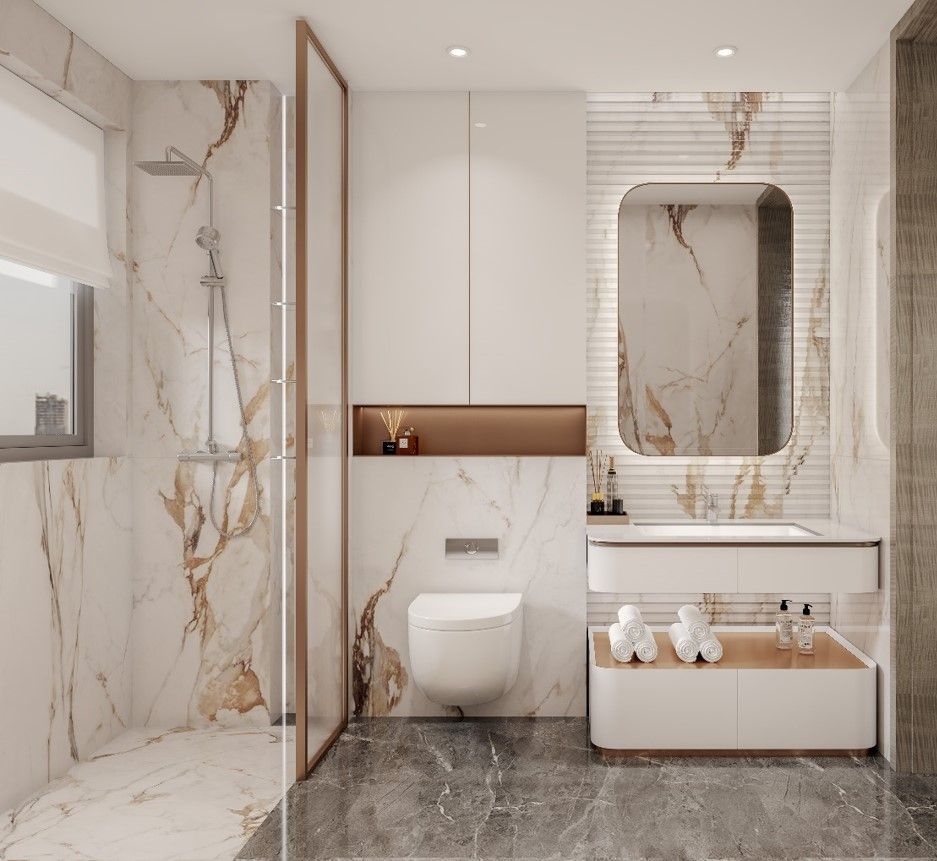

Overview
Regardless of size, bathrooms are necessary areas that should be carefully designed. Despite having a restricted amount of space, small bathrooms must be designed to feel roomy, practical, and fashionable. Tile design, including size, pattern, colour, texture, and arrangement, is one of the most powerful methods to makeover a tiny bathroom.
In addition to providing moisture protection for walls and flooring, tiles help establish the overall beauty of the bathroom. A small bathroom may be transformed into a calm haven with the correct tile selections, which can visibly increase space, improve light, and add personality.
This thorough reference offers advice on materials, installation, and trends in addition to imaginative and useful tiny bathroom tile design ideas that combine form and function.
Why Tiles Are Important in the Design of Small Bathrooms Tiles have multiple functions.
Durability and Water Resistance: Tiles are excellent at providing the moisture-proof surfaces that bathrooms need.
Aesthetic Appeal: There are an infinite number of colours, shapes, and textures available for tiles.
Visual Effects: A small bathroom can appear bigger, lighter, and cleaner with the correct tile design.
Easy Maintenance: Tiles are easy to keep hygienic and clean.
In small bathrooms, choosing the correct tiles is essential to preventing the area from seeming crowded or overpowered.
Selecting the Appropriate Tile Size
1. Tiny tiles
Intricate patterns are produced with mosaic tiles and small-format tiles (such as 2×2 or 4×4 inches).
Perfect for shower niches or flooring.
can give texture, but if applied excessively on every wall, it could appear busy.
2. Tiles of a Medium Size
Versatile sizes include 8×8 and 12×12 inches.
Strike a balance between aesthetic interest and maintaining a clean appearance.
Excellent for walls and floors.
3. Big Tiles
Large tiles (12×24 inches or larger) can visibly enlarge small bathrooms, despite what many people think.
There appears to be more room when there are fewer grout lines.
Floors or a single feature wall work best.
Pro Tip: To keep a small bathroom cohesive, don’t use a lot of varied tile sizes.
Patterns and Shapes of Tiles
The way tiles are shaped and patterned has a big impact on how people see bathrooms.
Common tile shapes include squares, which are elegant and straightforward and look good on walls and floors.
Rectangular subway tiles are timeless, particularly when laid out in a herringbone or brick pattern.
Hexagonal: Adds a geometric flair and is trendy.
Penny tiles are tiny, round tiles that are perfect for adding texture.
Moroccan or Arabesque shapes are distinctive and provide a touch of exotic charm.
Patterns: Straight Lay: For a neat appearance, tiles are arranged in straight rows.
Diamond or diagonal tile placement creates the illusion of larger flooring by positioning tiles at a 45-degree angle.
Herringbone: Produces vibrant visual appeal.
Both vertical and horizontal stacks can affect how a room is perceived; vertical stacks can make ceilings appear higher, while horizontal stacks can make walls appear wider.
Mixed Patterns: Accent spaces or feature walls can be created by combining tiles with various patterns.
Colour Options for Tiles in Small Bathrooms
Colour has a big impact on mood and how space is perceived.
1. Pale hues
Pastel colours, whites, and creams reflect light and create an airy atmosphere.
A timeless option for tiny bathrooms that want to look airy and tidy.
2. Tones That Are Neutral
Beiges, taupes, and soft greys offer warmth without being overpowering.
adaptable enough to match a variety of fittings and accessories.
3. Vibrant hues
Dramatic effects can be achieved with deep blues, greens, or even black tiles.
To prevent making the room appear smaller, they work best as accent walls or in small amounts.
4. Ombre or Two-Tone Effects
Depth and dimension can be added with gradual colour changes.
5. Glossy vs. Matte: Glossy tiles brighten the room by reflecting light.
Although they absorb more light, matte tiles have a sleek, contemporary appearance.
Tip: Glossy tiles typically provide the impression of more space in small bathrooms.
1. Ceramic tiles as a material option for bathroom tiles
Water-resistant, readily accessible, and reasonably priced.
a range of finishes and styles.
2. Tiles made of porcelain
more robust and dense than pottery.
Ideal for moist areas and floors.
frequently applied to large-format tiles.
3. Tiles made of glass
both light-enhancing and reflective.
Excellent for accent walls and backsplashes.
need to be installed carefully.
4. Tiles made of natural stone
Travertine, slate, and marble all provide opulent hues and textures.
need to be maintained and sealed.
adds elegance and a touch of natural warmth.
5. Tiles made of metal
Add a luxurious and modern touch.
Accents are frequently utilised sparingly.
Innovative Tile Designs for Small Bathrooms
1. Making Use of Subway Tiles
Subway tiles in white or soft hues, when combined with contrasting grout, are a classic option for tiny bathrooms because they draw attention to the tile pattern and generate visual appeal. Layouts that are stacked or vertical might raise ceilings and lengthen walls.
2. Patterned tile feature wall
To create a focal point, place a tile with a dramatic pattern on one wall (like behind the shower or vanity). Keep the other walls basic to prevent congestion.
3. A palette that is only one colour
By using tiles of the same colour for the walls and flooring, the boundaries are blurred and the space appears larger.
4. Tiles from floor to ceiling
The illusion of vertical space is improved and uniformity is created when tiles are extended all the way to the ceiling.
5. Blending Textures
To provide depth without crowding, mix textured tiles with glossy, smooth ones.
6. The floor’s hexagonal tiles
Hex tiles complement plain wall tiles and are aesthetically pleasing.
7. Chevron or Herringbone Designs
For dynamic movement, use rectangular tiles in herringbone patterns on walls or floors.
8. Use of Light Reflective Glass Tiles To bounce light, place glass tile accents on tiny wall portions or next to mirrors.
Advice for Installing Tiles in Compact Bathrooms
Very Few Grout Lines: For a seamless appearance, use larger tiles or corrected edges to minimise grout marks.
Consistent Grout Colour: The surface seems visually continuous when the grout and tile colours match.
Tiles arranged diagonally provide the impression of a wider floor.
Waterproofing: Moisture damage can be avoided by properly waterproofing beneath tiles.
Expert Installation: Guarantees accuracy and durability.
Combination of Tile and Lighting
It is essential to consider how lighting and tile finish interact:
Brightness is increased by glossy tiles and adequate lighting.
Soft lighting combined with textured tiles creates a warm, tactile atmosphere.
Natural light combined with light tiles increases the feeling of space.
Accent lighting and dark tiles provide drama without making the room feel dreary.
One of the most popular tile trends for small bathrooms is matte black accents.
Lighter tiles contrast stylishly with matte black tiles and black fittings.
2. Retro and Vintage Tiles
Moroccan or encaustic tiles with patterns provide personality.
3. Porcelain in Large Format
smooth, elegant appearance, and few grout lines.
4. Mirror and Metallic Tiles
for a little of glitz and a contemporary twist.
5. Textures Inspired by Nature
Natural warmth is provided by tiles that resemble sand, stone, or wood grain.
Cost Factors
Tile Type: Glass and natural stone are more expensive than ceramic, which is typically more affordable.
Tile Size and Pattern Complexity: Labour costs are higher for intricate layouts and smaller tiles.
Installation Area: Costs increase with more wall or floor coverage.
Maintenance: Specific cleansers and sealing are needed for certain tiles.
Tips for Maintaining Bathroom Tiles
Use gentle detergents to clean tiles on a regular basis.
For sensitive tiles, stay away from aggressive cleaners.
To avoid discoloration, periodically seal grout lines.
Quickly fix any loose tiles or cracks.
To protect floor tiles, use mats.
In conclusion
The secret to making small spaces feel airy, light, and welcoming is small bathroom tile design. You may design a bathroom that is both functional and aesthetically pleasing by carefully choosing the size, shape, colour, and pattern of the tiles and combining them with astute installation and lighting techniques.
The options are unlimited, ranging from classic subway tiles to striking geometric designs, from rough stone tiles to mosaics of reflected glass. The correct tiles can transform your tiny bathroom into a chic and tranquil haven, regardless of your preferred minimalist, rustic, modern, or eclectic style.