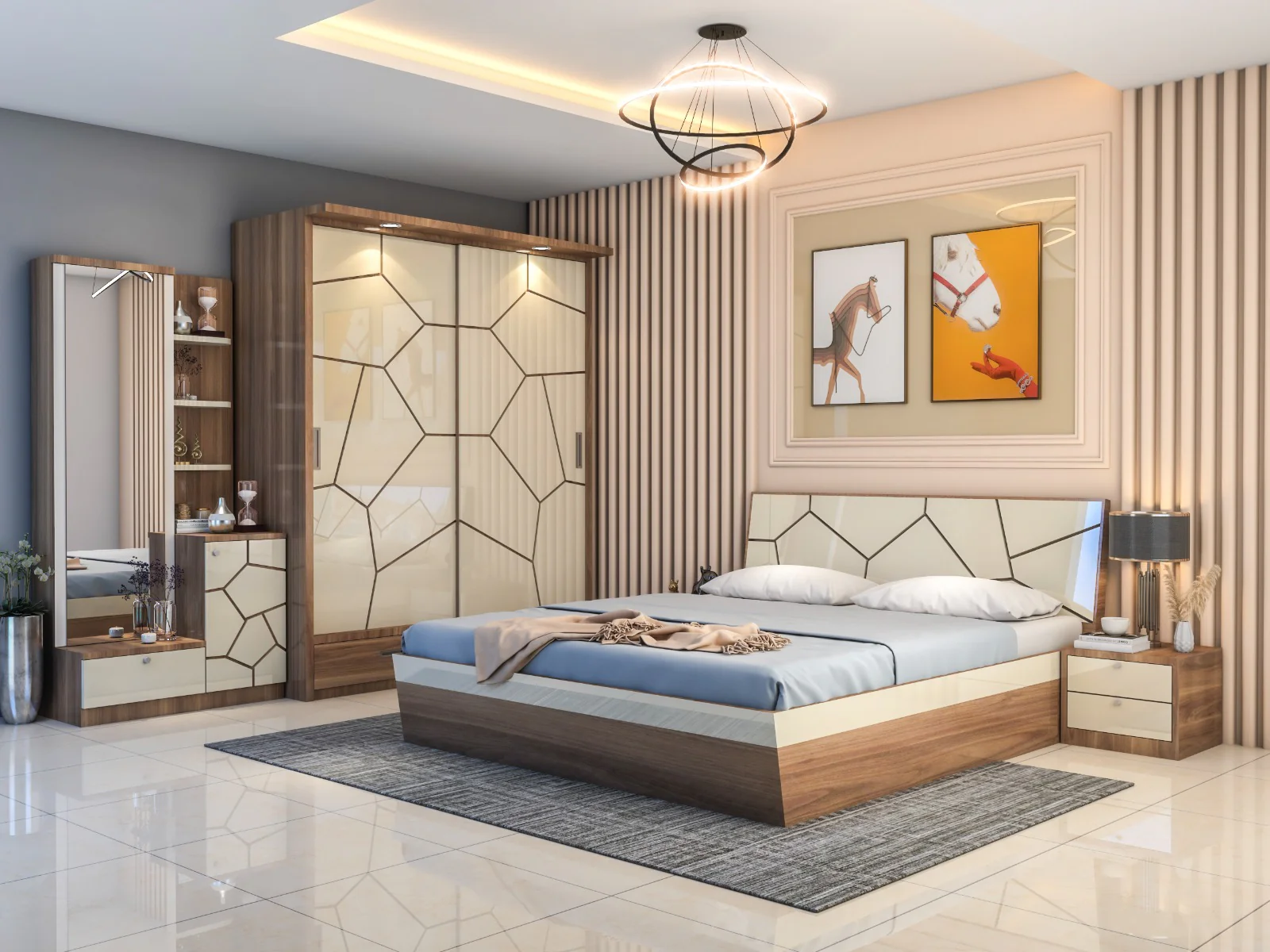

Overview
More than just a place to sleep, the bedroom is your private sanctuary that expresses your comfort, tastes, and way of life. The furniture you select is essential to this haven. Bedroom furniture is essential to creating a welcoming, practical, and fashionable space, from the bed itself to storage options and pieces that enhance the decor.
Understanding the different kinds of bedroom furniture, materials, layouts, and design concepts will help you make the best decisions, whether you’re beginning from scratch, remodelling, or upgrading a few components. Everything you need to know to outfit your bedroom with style, functionality, and comfort will be covered in this comprehensive book.
1. Crucial Pieces of Bedroom Furniture
1.1. The Mattress
The focal point of any bedroom is the bed. It establishes the design, determines the layout, and directly affects your comfort and quality of sleep.
Typical Bed Sizes:
Twin/Single: Perfect for smaller guest rooms or kids.
Full/Double: Ideal for people who sleep alone and like additional room.
The most common size for couples is queen.
King: Provides additional space for opulent arrangements and couples.
The California King is ideal for tall people because it is somewhat slimmer and longer than a typical king.
Types of Beds:
Platform beds are low to the ground, minimalist, and frequently devoid of a box spring.
Panel beds have a footboard and headboard, giving them a classic appearance.
Built-in drawers underneath the mattress are a feature of storage beds.
Four-poster beds and canopies are large and elegant pieces that go well with traditional decor.
Sleigh beds: A regal vibe is created by the curved footboards and headboards.
1.2. Bedside tables, or nightstands
Nightstands offer a useful place to store necessities, books, and lamps. While blending designs can add charm, a matching set on either side of the bed provides balance.
Things to think about:
Decide on a height that complements your mattress.
Depending on how much storage you need, choose open shelves or drawers.
Depending on your interior style, choose sturdy materials like metal or wood.
1.3. Chests and Dressers
In addition to providing necessary garment storage, these serve as surfaces for mirrors or décor.
Dressers: More expansive, frequently featuring a mirror above. Perfect for regular clothes.
Drawer chests: thinner and taller. Ideal for small areas.
Wardrobes and armoires are utilised when closet space is at a premium. able to hold accessories, hanging clothing, and even entertainment devices.
1.4. Closets and Wardrobes
Wardrobes are quite useful in bedrooms that don’t have built-in storage. With shelves, drawers, and hanging space, modular wardrobes can be tailored to the demands and arrangement of the area.
1.5. Mirrors
In addition to being useful, mirrors provide the impression that a space is larger and brighter. While ornamental wall mirrors improve the beauty of a design, a full-length mirror is a need.
1.6. Ottomans and Benches
A bench or ottoman at the foot of the bed provides both seating and storage. Some serve as trunks for seasonal clothing or bedding, while others are cushioned for comfort.
1.7. Loungers or Accent Chairs
An accent chair makes a comfortable reading area in larger bedrooms. Select patterns that offer ergonomic comfort and blend well with the overall decor.
1.8. Vanities and Desks
A small desk can be used for two purposes in a work-from-home arrangement, while a vanity table adds elegance and functionality. Seek out styles with built-in lighting or drawers.
2. Selecting Appropriate Materials for Furniture in Bedrooms
2.1. Solid wood (oak, teak, and mahogany): enduring, classic, and frequently more costly.
Engineered wood, such as plywood and MDF, is inexpensive and adaptable, but it could not last as long as solid wood.
2.2. Metal
Modern or industrial bedrooms frequently employ it. Metal frames can give the interior a minimalist edge and are long-lasting.
2.3. Furniture with Upholstery
Benches and beds with leather, velvet, or fabric coverings add cosiness and style. These are perfect for modern or opulent bedrooms.
2.4. Accents with Mirrors and Glass
used in drawers or nightstands to add glitz and reflect light, particularly in little or feminine-styled spaces.
3. Furniture for Bedrooms in Various Styles
3.1. Sleek, contemporary lines and simple profiles.
Bold highlights in neutral hues.
Glass and metal components.
Floating nightstands and platform beds.
3.2. Conventional elaborate carvings and rich woods.
Sleigh beds or four-posters.
Armoires and dressers that match.
Stylish bedside tables with brass accents.
3.3. Natural
earthy tones and reclaimed wood.
Barn-style or wrought iron bed frames.
dressers made of chunky wood and antique embellishments.
3.4. White finishes and light woods are Scandinavian.
furniture with simple lines and functionality.
Easy, comfortable accessories.
3.5. Free-spirited
a variety of colours, patterns, and materials.
headboards made of wicker or rattan.
unique arrangements of handcrafted and vintage furniture.
4. Advice on Bedroom Layout Design
4.1. Make the Bed a Priority Start by arranging the bed. It should ideally be the main attraction, positioned against the largest wall and out in the way of entrances and direct sunlight.
4.2. Preserve the Flow
Make sure there is easy access to seats and storage, as well as room to move around the bed (preferably 24 to 30 inches).
4.3. Equilibrium Style and Symmetry
Asymmetrical arrangements add a relaxed, contemporary feel, while matching lamps and nightstands provide a formal, well-balanced appearance.
4.4. Make Use of Vertical Space
Wall-mounted accessories, shelves, and tall dressers utilise vertical space without taking up too much floor area.
5. Furniture Storage Options for Bedrooms
Storage is frequently included into contemporary bedroom furniture to optimise practicality.
Storage Under the Bed
Shoes, bedding, or clothing that isn’t in season can be kept in storage beds or bins that slide underneath.
Multipurpose Furnishings
Options for concealed storage include nightstands with drawers, benches, and ottomans.
Shelves that float and wall units
Ideal for keeping surfaces clean while storing books or showcasing décor.
6. Small-Space Bedroom Furnishings
For small bedrooms:
Select furnishings with light hues to create an airy atmosphere.
Make use of furniture with many uses, such as convertible workstations or storage beds.
Choose slim-profile designs instead of large ones.
Mirrored furniture will reflect light and give the impression that the room is larger.
7. Eco-Friendly and Sustainable Choices
There are more and more eco-friendly bedroom furnishings available. Seek out:
FSC-certified wood guarantees ethical timber harvesting.
Reclaimed materials: unique and environmentally friendly.
Low-VOC finishes: Cut down on dangerous indoor pollutants.
Purchasing used furniture or assisting regional craftspeople are further examples of sustainable practices.
8. Tips for Upkeep and Care
Wooden furnishings: Use a dry or slightly moist cloth to clean; do not use too much dampness.
Upholstered Items: Spot clean stains and vacuum frequently.
Metal frames should be cleaned with a dry cloth and examined for loose joints or rust.
Glass Surfaces: For a smudge-free sheen, use a microfiber cloth and glass cleaner.
In addition to extending the life of your furniture, proper upkeep keeps your bedroom appearing new and welcoming.
9. Setting a Budget and Purchasing Affordable Bedroom Furnishings:
Seek out flat-pack or modular furniture.
Take advantage of seasonal discounts or clearance sales.
Combine expensive and reasonably priced items.
Invest-worthy items: The mattress and bed frame are essential for your well-being and restful sleep.
Wardrobes or dressers: Invest in long-lasting storage pieces.
Select classic pieces that will never go out of style, and as trends shift, refresh your accents or accessories.
10. Personalised Bedroom Furnishings
Personalised solutions that complement your area and style are made possible by custom furniture:
built-in closets that are sized to fit the size of your space.
custom headboards that blend in with wall textures or colour palettes.
Dressers and nightstands made to order for unusual areas.
Custom furniture improves utility and individuality, albeit being more expensive.
In conclusion
The purpose of bedroom furniture is to create a sanctuary where you may rest, unwind, and rejuvenate, not just to furnish a space. Your bedroom will be the ideal fusion of comfort, design, and functionality if you choose the appropriate items, materials, and layouts.
Every piece of bedroom furniture enhances the atmosphere and functionality of the space, from choosing the perfect bed to adding clever storage and decorative accents. You can create a room that feels both opulent and liveable with careful planning and design.
With the correct bedroom furniture, your bedroom may become your most treasured place at home, regardless of your preference for rich and classic or modern and minimalist design.