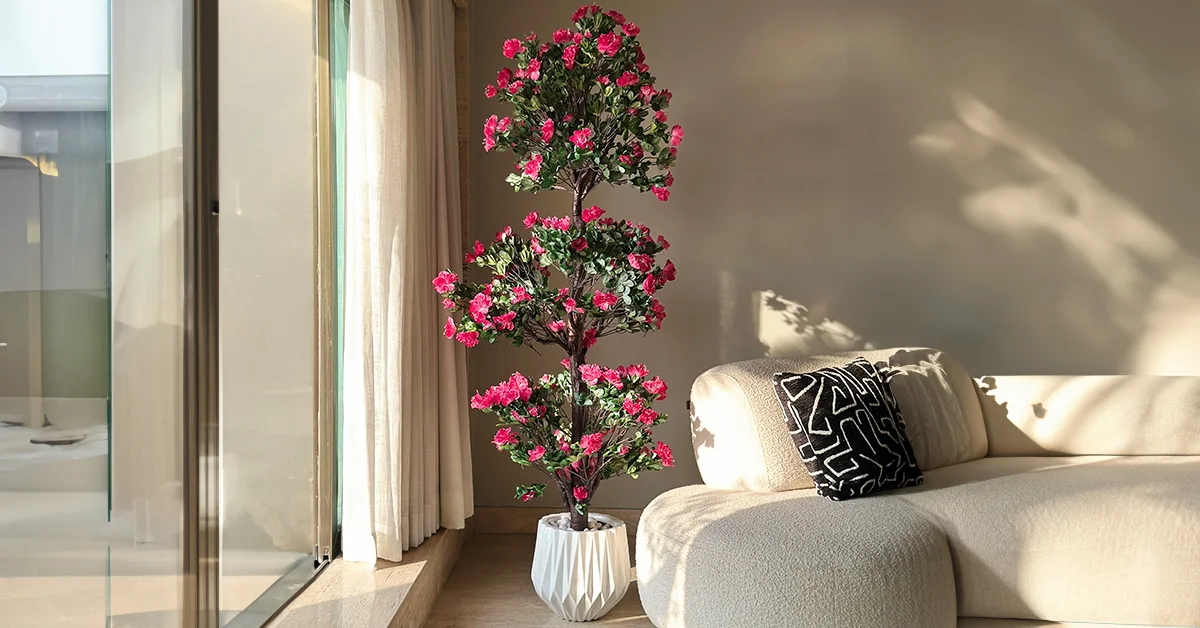

Overview
Artificial plants have been increasingly popular in recent years as a useful and adaptable substitute for real greenery in home décor. Without the need for upkeep, watering, or sunlight, they provide the beauty and freshness of plants. Artificial plants can easily add life, colour, and texture to your house, regardless of your hectic schedule, allergies, or an area with limited natural light.
In order to assist you smoothly integrate greenery into your living spaces, this thorough guide examines the types, advantages, materials, design suggestions, and maintenance advice for artificial plants.
Why Decorate Your Home with Artificial Plants?
1. Minimal Upkeep
Artificial plants require less maintenance than genuine plants, which need to be watered, pruned, repotted, and pest-controlled. To keep them looking new, just give them a little dusting every now and then.
2. Allergy-Friendly
Artificial plants are ideal for allergy patients because they don’t attract insects or release pollen.
3. Sturdiness
Despite changes in temperature and light exposure, artificial plants always retain their vivid colour and form.
4. Adaptability
Without worrying about their survival, you can put them anywhere—in kitchens, bathrooms, dark corners, or areas with high or low temperatures.
5. Long-Term Cost-Effective
Artificial greenery may initially cost more than certain live plants, but it will last for years without needing to be replaced or require additional maintenance.
Artificial Plant Types for Interior Design
To fit any interior design theme, artificial plants are available in a broad range of sizes and styles:
1. Man-made trees
These include modest indoor trees as well as towering statement plants like palm trees, olive trees, and fiddle leaf figs. They give living rooms, bedrooms, or foyers a rich focal point.
2. Artificial Blooming Plants
Artificial hydrangeas, roses, orchids, and cherry blossoms bring beauty and colour to any space without withering or losing their petals.
3. Cacti and Succulents
Realistic faux succulents give a stylish and understated green touch to desks, tabletops, and shelves.
4. Artificial Hanging Plants and Vines
To soften edges and add greenery at various heights, artificial plants such as string-of-pearls, ivy, or pothos can be draped over shelves or hanging planters.
5. Synthetic Moss and Grass
Perfect as attractive ground cover in plant displays or as terrariums or centrepieces.
Components of Artificial Plants
The materials utilised have a significant impact on the artificial plants’ quality and realism:
1. Silk
The softness and realistic texture of silk plants are well-known. They are utilised for expensive artificial flowers and plants and frequently have a natural gloss.
2. Plastic and Polyester
The most reasonably priced artificial plants are composed of plastic or polyester. Although they are not as delicate as silk, their realism has increased due to manufacturing advancements.
3. Latex
Premium fake greenery frequently uses latex because it gives leaves a flexible and realistic texture.
4. Foam
used to add softness and shape retention to some floral petals and foliage.
How to Select Artificial Plants for Various Spaces
1. Statement Trees in the Living Room: Tall, synthetic fiddle leaf Palms or figs can serve as room anchors.
Tabletop Plants: Little floral plants or succulents enliven side tables.
Vines: They offer comfort when draped over entertainment centres or bookcases.
2. Bedroom: For a soothing effect, place small potted plants on dressers or nightstands.
Adding greenery without taking up floor space is possible with hanging plants.
Flowering Plants: Roses and orchids add gentleness and beauty.
3. Kitchen Herb Replicas: Low-maintenance artificial lavender, basil, or rosemary pots offer appeal.
Tiny succulents are ideal for counters or windowsills.
4. Moisture-Resistant Plants: In places where genuine plants could not flourish, artificial ferns or orchids do well.
Harsh bathroom lines are softened by hanging vines.
5. Study/Office Desk Plants: Calm and concentration are aided by small cacti or succulents.
Shelf Plants: Pothos or trailing ivy liven up work areas.
Advice on How to Style Artificial Plants
1. Vary the Textures and Sizes
A dynamic, organic appearance is produced by combining lofty trees with trailing vines and tiny succulents.
2. Make Use of Lifelike Planters
Select pots and containers that go well with your interior design; woven baskets, ceramic, terracotta, or metallic containers enhance the appearance.
3. Establish Green Spaces
To replicate a real indoor garden, place a collection of artificial plants in a corner that vary in height and kind.
4. Frame Mirrors or Art with Greenery
Artificial plants enhance focus points and provide dimension when placed close to wall décor.
5. Add Plants to Your Shelving
To create a well-curated, vibrant shelf display, arrange small plants among books and décor pieces.
6. Use Lighting to Draw Attention
To create a cosy atmosphere, accent your artificial plants with spotlights or LED strips.
Upkeep and Handling of Artificial Plants
Despite being low maintenance, artificial plants do need some attention to maintain their best appearance:
1. Dust Frequently
Dust leaves and stems with a soft cloth, duster, or compressed air.
2. Use water or mild soap to clean.
Wipe with a moist towel or rinse with lukewarm water for tough dirt. Steer clear of strong chemicals.
3. Steer clear of direct sunlight
Fading may result from prolonged exposure to sunshine. Plants should be placed in places with little or no sunlight.
4. Reshape and Fluff
Leaves may get squeezed or bowed with time. Restore their natural look by gently reshaping and fluffing.
Advantages of Artificial Plants Compared to Real Plants: An Overview Actual Plants
Upkeep Very little (occasional cleaning and dusting) Watering, trimming, and repotting on a regular basis Years without a drop varies; susceptible to illness and demise
Allergies Hypoallergenic may result in allergic responses
Light Needed No need for grow lights or enough sunshine
Problems with Pests Not one can draw pests such as mites or aphids.
Expense Over Time One-time expenditure Continuous maintenance and replacement expenses
Frequently Held Myths Regarding Artificial Plants
Myth: Artificial plants appear phoney or inexpensive.
Fact: Without careful examination, high-quality artificial plants are becoming so lifelike that they cannot be distinguished from real ones.
Myth: Real plants create a more ambience than artificial ones.
Fact: Artificial flora may produce an equally welcoming and calming ambience with proper styling and maintenance.
Myth: Artificial plants harm the ecosystem.
Fact: Despite being constructed of plastic, a lot of artificial plants can be recycled, used again for years, and don’t require the water and chemicals that come with growing actual plants.
Environmentally Friendly Aspects
If you care about sustainability, search for:
Recyclable Materials: Select plants that are composed of natural fibres or recyclable polymers.
Durability: Waste is decreased by plants with a long lifespan.
Non-Toxic Paints and Dyes: Make sure the materials are environmentally friendly and safe.
Ethical Manufacturing: Encourage companies who are dedicated to lessening their influence on the environment.
1. Fiddle Leaf Figs are popular artificial plants for home décor.
The Fiddle Leaf Fig is a popular choice for contemporary home design because of its wide, glossy leaves.
2. The Snake Plant
It is a low-key and fashionable option because of its erect sword-like leaves.
3. The Monstera
Monstera offers a touch of the tropics with its distinctive split leaves.
4. Succulents
Compact, sculpture-like, and multifaceted, they are ideal for minimalist designs.
5. Orchids
Beautiful flowering plants that add a little refinement.
6. Ferns’ delicate, feathery leaves offer freshness and texture.
Using Artificial Plants in Various Design Concepts
1. Contemporary
Use simple fake plants, such as snake plants and succulents, in streamlined pots and geometric planters.
2. Free-spirited
Use macramé hangers and textured planters with a range of artificial plants.
3. Conventional classic containers with tall trees like fiddle leaf figs or artificial floral plants.
4. Industrial planters made of concrete or metal that hold hardy-looking fake vegetation, including cacti or succulents.
5. Nordic
Simple fake plants in neutral-colored pots that have a natural appearance.
In conclusion
Because they provide a hassle-free method to experience the beauty and advantages of greenery, artificial plants have completely changed the way people decorate their homes. They fit into any environment and lifestyle because of their adaptability, durability, and ease of upkeep.
You may create a lively, welcoming, and fresh ambience in your house all year long by selecting premium materials, decorating with care, and taking good care of your artificial plants. Artificial plants offer nature home without the hassle, whether you’re looking for delicate succulents or a big statement tree.